The End of Pitru Paksha and the Beginning of Devi Paksha
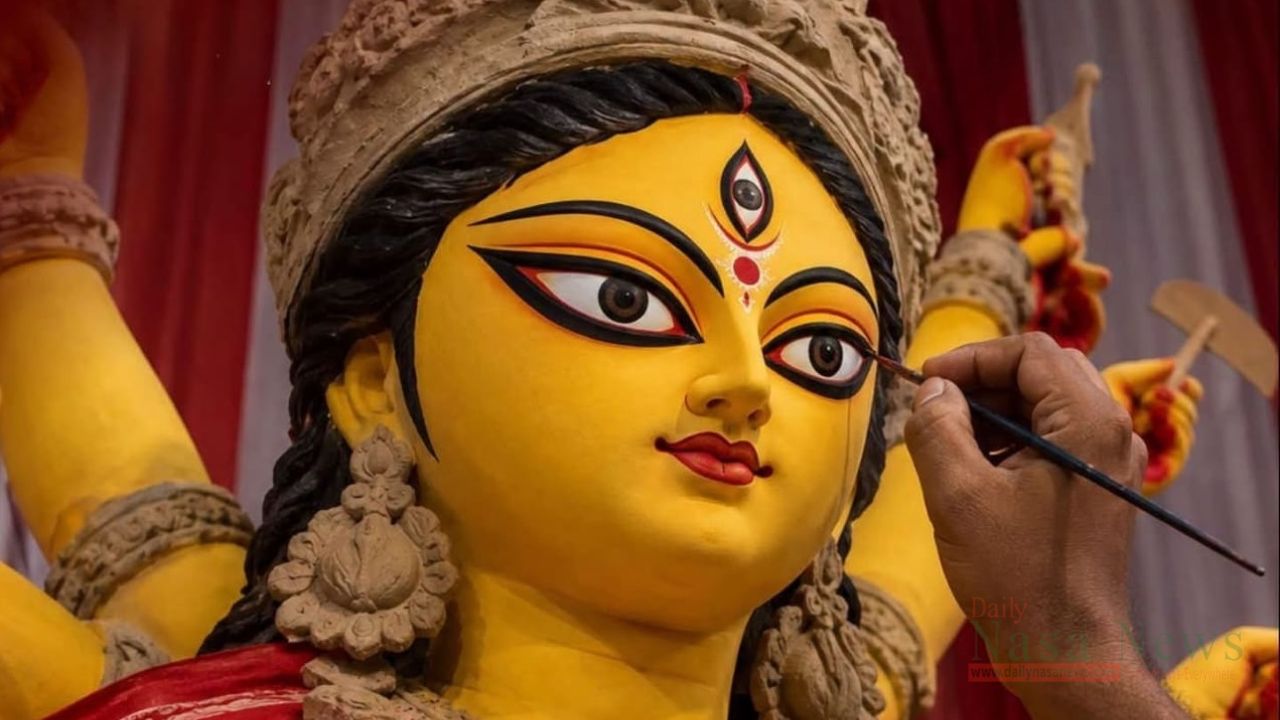
Pallab Chakraborty,Nasirnagar,Brahmanbaria.Today is October 10 – Mahalaya. This day holds special significance for Hindus. With Mahalaya,the Pitripaksha (the fortnight dedicated to ancestors) comes to an end, and the Devipaksha (the fortnight dedicated to the Goddess) begins. And with that begins the anticipation of one of the most significant religious and cultural festivals for Bengalis-Sharadiya Durga Puja.Mahalaya signifies the announcement of the Goddess's arrival. When white autumn clouds drift across the morning sky, when fields are swaying with silver grass, and the fragrance of shiuli flowers fills the air—that's when the melodious call of Mahalaya resonates in the hearts of Bengalis. The atmosphere of Durga Puja seems to spread all around with the hymns to the Goddess, the recitation of Chandi, and the songs welcoming the Goddess, broadcast on radio and television.The end of Pitri PakshaAccording to Hindu religious belief, Mahalaya is the last day of Pitri Paksha. During Pitri Paksha, people remember their deceased ancestors and perform rituals like Tarpan and Shraddha, praying for the peace of their souls.At dawn on Mahalaya, many people perform tarpan for their ancestors on the banks of rivers, ponds, or other bodies of water.This ritual is not merely a part of religious belief; it is deeply intertwined with feelings of respect, gratitude, and remembrance for one's ancestors.Happy beginning of DevipakshaDevipaksha begins after Mahalaya.From this time onwards, preparations for Durga Puja gain momentum in every Bengali household. The organizers become busy with the decoration of the pandals, the making of the idols, the illumination, and the arrangements for the puja. In mythology, the advent of Goddess Durga symbolizes the destruction of evil forces and the establishment of virtuous forces. Therefore, the story of the Goddess's victory over Mahishasura is not merely a religious narrative—it is also considered a symbol of the triumph of justice over injustice, of good over evil, and of light over darkness.Mahalaya means the arrivalOne of the main attractions of Mahalaya is the announcement of the Goddess's arrival. For many years, the recitation of Chandi and the atmosphere of Mahishasuramardini at dawn on Mahalaya have been an integral part of Bengali culture.Hearing the hymns, the chanting of mantras, and the melodious tunes of arrival at the break of dawn, many feel as if Goddess Durga is preparing to descend to Earth from Mount Kailash along with her children. Therefore, Mahalaya is not just a tithi (lunar day); it is a cultural moment deeply intertwined with the emotions, memories, and festivals of Bengalis.The message of autumn is also in nature.It seems that autumn nature also has a close relationship with Mahalaya. The blue sky, the white clouds floating, the swaying of the kaash flowers, the fragrance of the shiuli flowers – all together signal that autumn has arrived.And autumn heralds the arrival of Durga Puja.From villages to cities, preparations for the festival become evident everywhere after Mahalaya. In some places, the final brushstrokes are being applied to the idols, in others, the pandals are being constructed, and elsewhere, preparations for the illuminations are underway.The message of the festival of harmonyDurga Puja is not merely a religious festival for Hindus; it also has a profound impact on the social and cultural fabric of Bengal. The bonds of joy, goodwill, and harmony among people of different religions and communities are further strengthened around Puja. Mahalaya marks the beginning of that grand festival. Therefore, at the very beginning of the Devi Paksha, the aspirations for a prosperous, beautiful, and humane society are expressed.Destruction of evil, establishment of goodThe core message of Mahalaya seems to be one: the destruction of evil forces and the establishment of good forces. Devotees hope that all the despair, fear, darkness, and negative forces in people's lives will be dispelled through the worship of Goddess Durga, paving the way for peace, prosperity, and enlightenment.Therefore, the dawn of Mahalaya is not merely a time for observing a religious ritual; it also symbolizes renewed hope.The fortnight dedicated to the ancestors is over, and the fortnight dedicated to the Goddess begins. All around, there are now swaying reeds, the fragrance of shiuli flowers, and the melodious tunes of Agomoni.The only thing left to wait for is the Goddess's arrival on Earth. Mahalaya marks the formal beginning of that anticipation.

 ভিডিও স্টোরি
 ফটো স্টোরি